
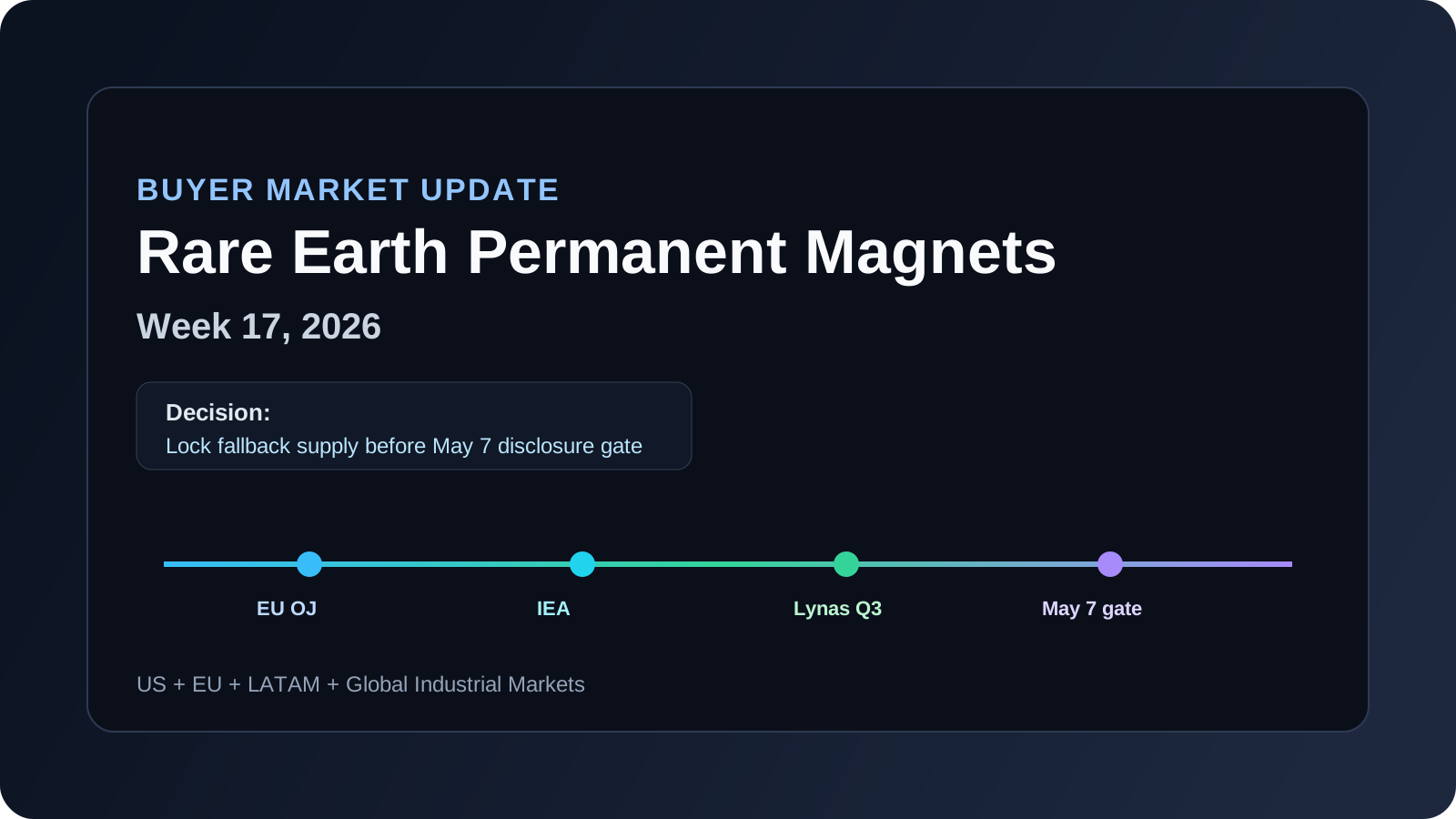
Rare Earth Permanent Magnets Market Update (2026-W17): New Quarter Data Tightens Buyer Allocation Planning
Week 17 rare earth permanent magnets update: verified NdFeB/SmCo supply and export-risk signals plus immediate sourcing actions for US, EU, and LATAM buyers.
One-Line Decision (Week 17, 2026): Do not treat April updates as broad magnet price relief. Treat them as an allocation and contract-structure signal: split awards by grade family, lock fallback sources now, and re-check all Q3 assumptions after the next U.S. quarterly disclosure on May 7, 2026.
Snapshot date: April 22, 2026. Coverage: United States + European Union + Latin America + global industrial markets.
Research window: March 23, 2026 to April 22, 2026.
Last reviewed: April 22, 2026 (using filing/publication dates from cited primary sources).
Why This Matters in Week 17
- The strongest new data point is one supplier quarter report, not a full global finished-magnet reset by grade and destination market.
- EU and IEA signals keep concentration and resilience risk active, so buyers still need risk-aware RFQ structures instead of one low-price assumption.
- The next fixed U.S. checkpoint is May 7, 2026, so teams locking Q3 allocations now can avoid rework by using staged decision gates.
If your team is freezing Q3 awards now, contact our sourcing team for a grade-segmented fallback plan.
What Changed (Last 30 Days)
| Date | Verified change | Why magnet buyers should care now |
|---|---|---|
| 2026-03-31 | The EU published Parliament resolution C/2026/1447 in the Official Journal, calling for faster risk-preparedness, stockpiling assessment, and stronger CRM resilience actions after China-related restrictions. | EU programs now have stronger policy pressure to show supply resilience, not only low quote prices. This raises compliance and traceability workload in RFQs. |
| 2026-04-08 | IEA released Rare Earth Elements: Pathways to secure and diversified supply chains. Key points: high concentration across mining/refining/magnet making, and major downside if restrictions intensify. | Buyers should model concentration risk as a lead-time and allocation problem, not only a commodity-price issue. |
| 2026-04-09 | MP Materials announced Q1 2026 results date (May 7, 2026) and webcast timing, but did not publish new quarter magnet-output figures in that notice. | U.S.-linked buyers still lack a fresh quarter throughput reset in this window; avoid premature cost-down re-baselining. |
| 2026-04-21 | Lynas published March-quarter results (period ended March 31, 2026): NdPr production 1,996t (vs 1,404t in prior quarter), total REO production 3,233t, and quarterly gross sales revenue A$265.0m. | This is a real upstream throughput and monetization signal, but not proof of immediate global finished-magnet oversupply across all grades. |
| 2026-04-21 | Same Lynas report reiterates samarium progress and states first-step samarium oxide capacity expectation (~400 t/y) with first production in March 2026. | Sm-related pathways (including SmCo-adjacent planning) gain a stronger non-China signal, but downstream qualification and conversion remain program-specific. |
| 2026-04 (ver. 1.2) | USGS MCS 2026 (Version 1.2, April 2026) keeps U.S. rare-earth compounds/metals net import reliance at 67% for 2025 estimates and updates trade/price context. | U.S. buyers should still carry import-risk controls in 2026 contracts even with domestic capacity progress. |
Method, Scope, and Exclusions
- Included evidence: dated primary-source publications in the research window, plus 2026 IEA and USGS references used for structural context.
- Geographic scope: U.S., EU, LATAM export-linked programs, and global industrial buyer decisions.
- Excluded from this page: non-public rebate terms, customer-specific allocation contracts, and unpublished customs records.
Signal Timeline and Immediate Decision Windows
Mobile note: swipe horizontally to view full timeline.
Which Grades and Applications Are Affected
| Grade / pathway | In-window evidence signal | Practical buyer meaning |
|---|---|---|
| Standard sintered NdFeB (N35-N52) | Lynas quarter showed stronger output and sales; IEA still shows concentrated global magnet making. | Avoid assuming broad global oversupply. Keep dual-source discipline and split volume awards. |
| High-temperature NdFeB (H/SH/UH/EH/AH) | IEA concentration persists in heavy-rare pathways; EU resilience pressure supports stricter risk controls. | Protect schedule-critical programs with pre-approved alternates and explicit coercivity/temperature boundaries. |
| Sm-related pathways (Sm metal / Sm oxide / SmCo planning) | Lynas confirms first samarium oxide production in March and first-step annualized scale target in project section. | Positive supply-chain signal, but do not skip validation gates for SmCo conversion and part qualification. |
| Bonded NdFeB programs | No direct broad bonded-capacity reset was disclosed in this 30-day window. | Keep MOQ, resin-route, and shelf-life clauses explicit instead of using one generic NdFeB template. |
| Wind, traction motors, robotics, and defense-linked demand | IEA + EU policy publications reinforce geopolitical and concentration risk framing. | Treat continuity and traceability as commercial requirements, not optional compliance add-ons. |
Pricing, Lead-Time, and Sourcing Impact by Market
Mobile note: swipe horizontally to view full matrix.
| Market | Pricing signal (current window) | Lead-time signal (current window) | Sourcing implication now |
|---|---|---|---|
| United States | No in-window full quarter output disclosure from MP yet; next official checkpoint is May 7. | Elevated for high-temp and Sm-sensitive programs where qualification cycles are long. | Keep two purchase scenarios and avoid locking one low-cost assumption for all grades. |
| European Union | Official-journal signal increases emphasis on strategic stocks and risk preparedness. | High for buyers with strict documentation and continuity requirements. | Add origin traceability, substitution controls, and contingency language in frame agreements. |
| Latin America (export-linked) | Regional quotes remain influenced by destination policy and qualification behavior in US/EU value chains. | Volatility imported through destination compliance and premium-grade allocation changes. | Build contracts by destination regime, not one universal commercial template. |
| Global industrial markets | IEA still flags concentration and magnet-stage bottlenecks despite planned diversification. | Shock risk remains asymmetric across grade families and application criticality. | Maintain safety stock logic and dual-qualification for critical SKUs through H2 planning. |
Who Should Act Now (Buyer Checklist)
| Role | Action to complete this week | Why now |
|---|---|---|
| Sourcing managers | Insert a formal post-May-7 re-baseline gate in Q3-Q4 sourcing approvals. | U.S. disclosure timing is now known; rushing before that checkpoint increases pricing error risk. |
| Procurement teams | Split contracts by grade path: standard NdFeB, high-temp NdFeB, Sm-related pathways. | Quarter data and policy signals are not symmetric across grades. |
| OEM engineering | Reconfirm substitution envelope (temperature, coercivity, demag risk) before cost-down approvals. | Sm/Nd pathway shifts can reduce cost assumptions but increase field-failure exposure if limits are vague. |
| Distributors | Rebuild inventory policy by destination market and application criticality. | EU resilience direction and global concentration risks can re-prioritize customer allocation suddenly. |
| Program managers | Define trigger-based alternate-source release (for example, lead-time slip beyond threshold). | Lead-time shocks usually arrive before redesign cycles can absorb them. |
| Commercial teams | Quote with assumption tags (base case vs stress case) and disclose risk variables to customers. | Protects margin and avoids dispute when allocation or compliance constraints tighten. |
Related decision guides:
- Rare Earth Permanent Magnets Market Update (2026-W16)
- April 2026 U.S. Magnet Tariff Update
- NdFeB vs SmCo Magnets: Complete Comparison
- NdFeB Magnet MOQ Guide
- How to Choose Magnet Supplier in China
- Contact our sourcing team
Risks and Limits (Evidence Gaps and Boundaries)
| Risk / boundary | What is verified | What remains uncertain | How to manage it |
|---|---|---|---|
| Treating one strong quarter report as global easing | Lynas published materially stronger quarter metrics on 2026-04-21. | Public filings still do not provide global finished-magnet availability by every grade/application corridor. | Keep supply decisions segmented by grade and destination market. |
| Conflating policy direction with immediate legal obligation | EU Official Journal publication is a strong direction signal on resilience and stock preparedness. | Timing and legal force of downstream implementation measures differ by instrument and Member State process. | Apply policy-sensitive contract clauses now, while tracking formal implementation milestones. |
| Assuming U.S. supply reset before fresh quarterly data | MP announced Q1 disclosure timing, not new quarter throughput detail in that notice. | Final U.S. quarter metrics and guidance were not yet published in this window. | Delay irreversible Q3 cost-down commitments until after May 7 review. |
| Overstating tariff/regulatory novelty in this exact window | Federal Register API search for magnet terms in this window returned no new magnet-specific rule text. | Future technical corrections or agency notices can still arrive quickly. | Keep customs/regulatory monitoring live and recheck before shipment cutoffs. |
FAQ
Did this week confirm a broad NdFeB price drop?
No. The April signals are stronger on allocation and risk structure than on broad, transactable global price easing.
Is the Lynas quarter enough to relax all backup sourcing?
No. It is a meaningful positive signal, but buyers still need second-source and substitution controls for critical SKUs.
Are Sm pathways now fully de-risked?
No. Upstream samarium progress improved, but downstream metal conversion, qualification, and customer approval cycles still govern real availability.
What is the next hard checkpoint for U.S.-linked buyers?
May 7, 2026, when MP Materials scheduled Q1 2026 financial results publication and webcast.
Do EU buyers need to change RFQ design now?
Yes. Even before every downstream measure is final, resilience and risk-preparedness expectations justify stronger traceability and fallback clauses now.
What is the biggest buyer mistake in this window?
Running one generic sourcing model for all magnet grades, regions, and applications.
Need a 14-Day Allocation Risk Check?
If Q3 terms are being finalized before the next U.S. disclosure checkpoint, use a short action pack with:
- grade-segmented fallback lanes (standard NdFeB vs high-temp NdFeB vs Sm-related pathways),
- destination-specific compliance and traceability clauses (US/EU/LATAM-linked shipments), and
- dual commercial assumptions (base case and stress case) to prevent allocation-driven margin gaps.
Start here: Contact our sourcing team.
Sources
- Quarterly Activities Report (period ended 31 March 2026) — Lynas Rare Earths (ASX filing via official announcement endpoint), 21 April 2026
https://wcsecure.weblink.com.au/clients/lynascorp/headline.aspx?headlineid=61321239 - Quarterly Activities Report PDF (03080721.pdf) — Lynas Rare Earths, 21 April 2026
https://wcsecure.weblink.com.au/pdf/LYC/03080721.pdf - Financial Reports (index page showing April 2026 filing entries) — Lynas Rare Earths, accessed 22 April 2026
https://lynasrareearths.com/investors-media/reporting-centre/financial-reports/ - Investor Briefings (March quarter briefing entry dated 21 April 2026) — Lynas Rare Earths, accessed 22 April 2026
https://lynasrareearths.com/investors-media/briefings/ - MP Materials Announces Date for First Quarter 2026 Financial Results and Webcast — MP Materials, 9 April 2026
https://investors.mpmaterials.com/investor-news/news-details/2026/MP-Materials-Announces-Date-for-First-Quarter-2026-Financial-Results-and-Webcast/default.aspx - New projects, partnerships and policies are needed to address supply chain risks for rare earth elements — International Energy Agency, 8 April 2026
https://www.iea.org/news/new-projects-partnerships-and-policies-are-needed-to-address-supply-chain-risks-for-rare-earth-elements - Rare Earth Elements: Executive summary — International Energy Agency, 2026 report page accessed 22 April 2026
https://www.iea.org/reports/rare-earth-elements/executive-summary - P10_TA(2025)0166 – Tackling China's critical raw materials export restrictions (OJ publication C/2026/1447) — EUR-Lex / Official Journal of the European Union, 31 March 2026
https://eur-lex.europa.eu/eli/C/2026/1447/oj/eng/pdf - Mineral Commodity Summaries 2026 (Version 1.2, April 2026) — U.S. Geological Survey, April 2026
https://pubs.usgs.gov/periodicals/mcs2026/mcs2026.pdf - Rare Earths chapter, MCS 2026 — U.S. Geological Survey, 2026
https://pubs.usgs.gov/periodicals/mcs2026/mcs2026-rare-earths.pdf - Federal Register API query (permanent magnets, 2026-03-23 to 2026-04-22) — Office of the Federal Register, accessed 22 April 2026
https://www.federalregister.gov/api/v1/documents.json?conditions%5Bpublication_date%5D%5Bgte%5D=2026-03-23&conditions%5Bpublication_date%5D%5Blte%5D=2026-04-22&conditions%5Bterm%5D=permanent%20magnets
Author

Categories
More Posts
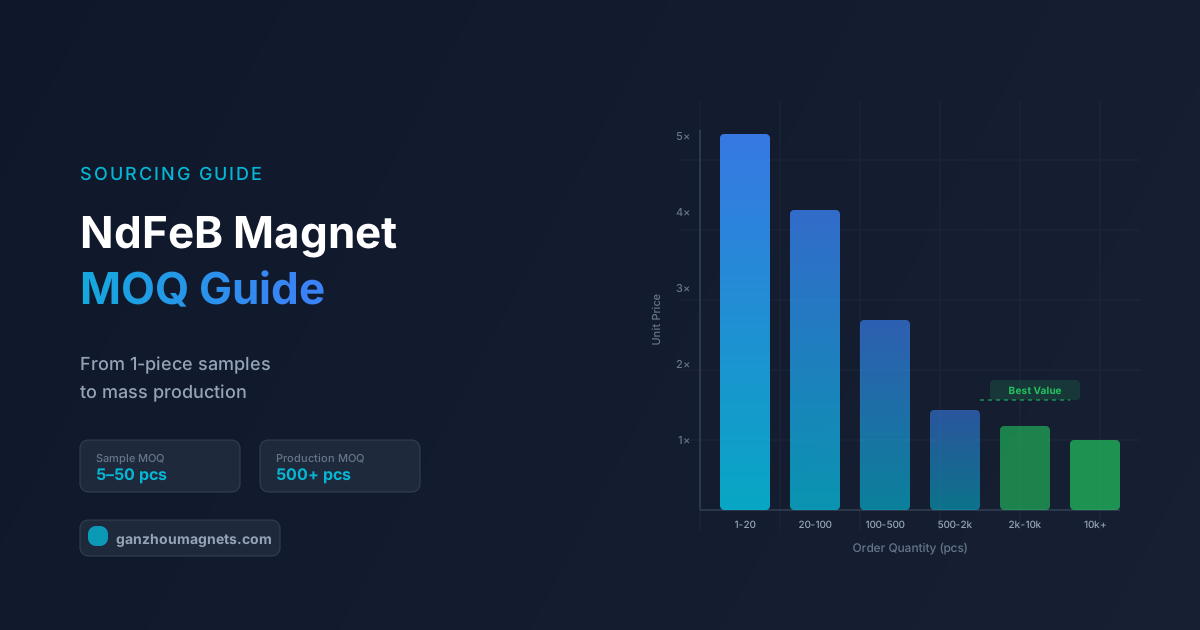
Guía de MOQ para imanes NdFeB: De muestras de 1 pieza a producción en masa
Comprenda las cantidades mínimas de pedido para imanes de neodimio personalizados de proveedores chinos. Incluye pedidos de muestra, prototipos y puntos de precio por volumen.
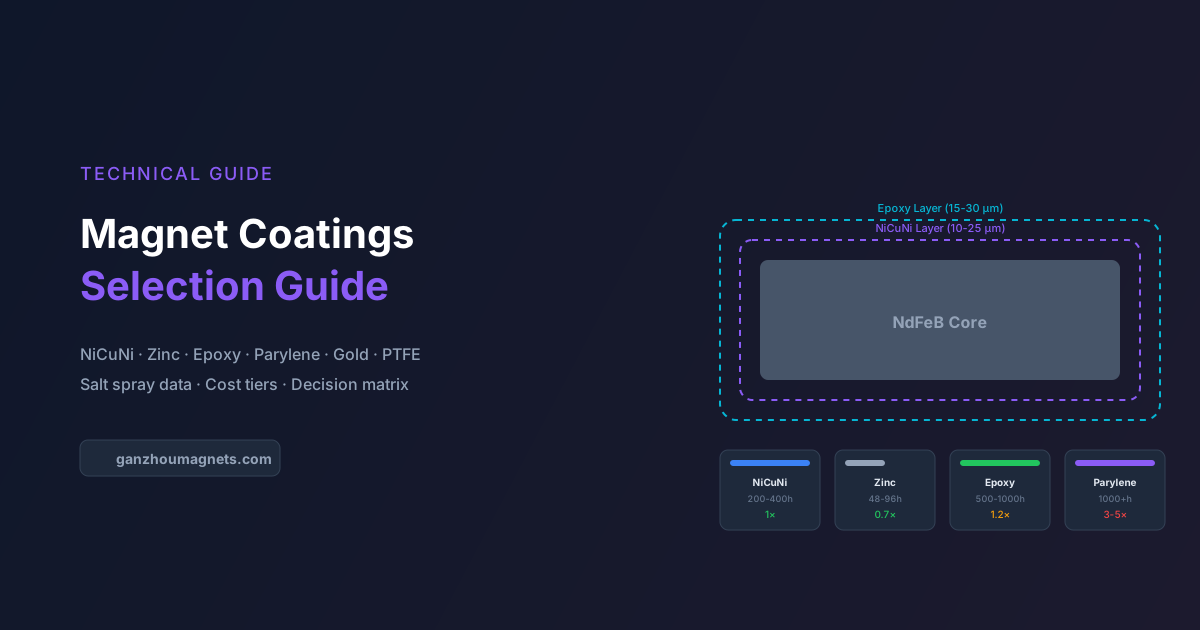
Recubrimientos y tratamientos superficiales de imanes: Guía completa de selección
Comparación detallada de recubrimientos para imanes NdFeB — NiCuNi, zinc, epoxi, parileno, oro y PTFE. Incluye datos de niebla salina, niveles de costo y recomendaciones por aplicación.
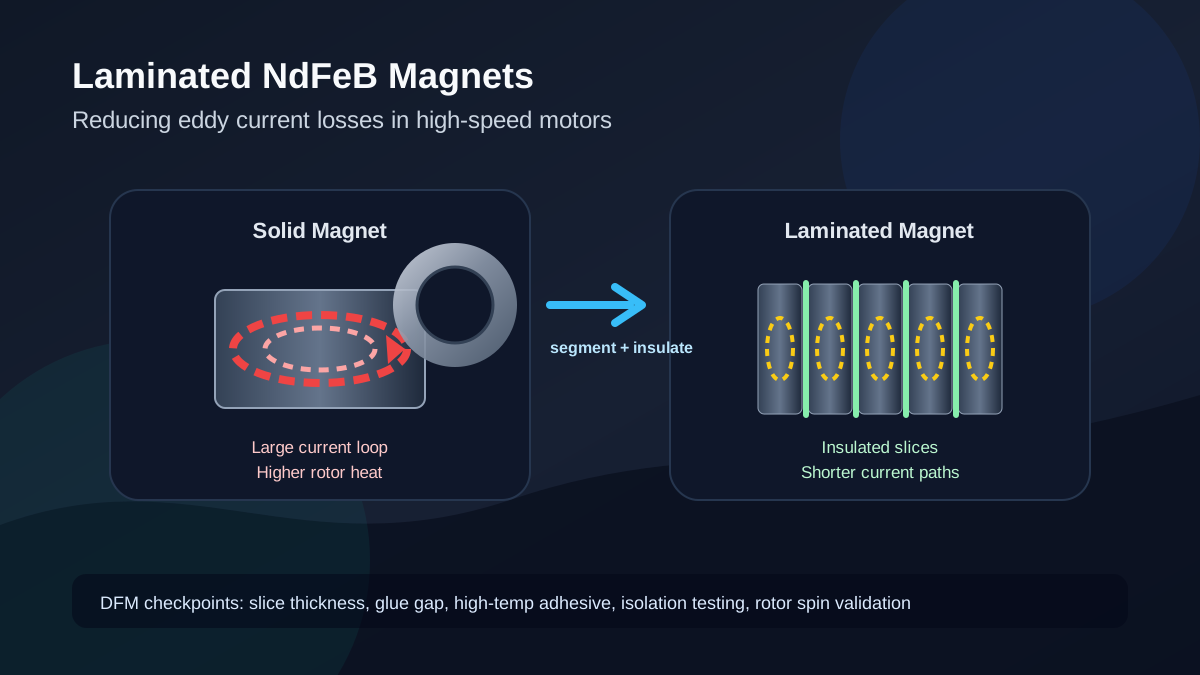
Laminated NdFeB Magnets for High-Speed Motors
Laminated NdFeB magnets guide for high-speed motors: compare eddy current loss, slice thickness, QA tests, cost trade-offs, and RFQ specs. Contact us.