
NdFeB Magnet MOQ Guide: From 1-Piece Samples to Mass Production
Understand minimum order quantities for custom neodymium magnets from Chinese suppliers. Covers sample orders, prototype runs, and volume pricing breakpoints.
What is MOQ and Why Does It Matter?
MOQ (Minimum Order Quantity) is the smallest number of pieces a supplier will produce in a single order. For custom NdFeB magnets, MOQ directly affects:
- Unit price — smaller orders cost more per piece
- Lead time — some factories prioritize larger orders
- Feasibility — very small custom runs may not be economically viable
Understanding MOQ expectations helps you plan procurement more effectively and negotiate better terms.
MOQ by Order Type
Sample Orders (1–50 pcs)
Most professional magnet suppliers accept sample orders. Here's what to expect:
| Factor | Typical Range |
|---|---|
| Quantity | 5–50 pcs |
| Unit price premium | 2–5× production price |
| Lead time | 7–14 days |
| Tooling | Usually not required for standard shapes |
| Purpose | Dimensional and magnetic validation |
Key insight: Sample orders are essential for qualification. A supplier that refuses to make 10–20 samples is a red flag. The premium price is justified because the factory still needs to set up the same equipment for a small batch.
Prototype Runs (50–500 pcs)
For engineering validation or small-series production:
| Factor | Typical Range |
|---|---|
| Quantity | 50–500 pcs |
| Unit price | 1.5–2.5× production price |
| Lead time | 2–3 weeks |
| Tooling | May be required for custom shapes |
| Purpose | Functional testing, pre-production validation |
Production Orders (500+ pcs)
Standard production quantities where you get the best pricing:
| Factor | Typical Range |
|---|---|
| Quantity | 500–10,000+ pcs |
| Unit price | Standard pricing |
| Lead time | 2–4 weeks |
| Tooling | Amortized over quantity |
| Purpose | Volume procurement |
MOQ by Magnet Shape
The shape of your magnet significantly affects MOQ requirements:
| Shape | Typical Production MOQ | Why |
|---|---|---|
| Disc / Cylinder | 100–500 pcs | Standard shapes, minimal setup |
| Block / Bar | 100–500 pcs | Cut from sintered blocks |
| Ring | 200–500 pcs | Requires ID/OD machining |
| Arc / Segment | 500–1,000 pcs | Complex geometry, more waste |
| Countersunk | 200–500 pcs | Additional drilling operation |
| Custom complex | 500–2,000 pcs | May require dedicated tooling |
Price Breakpoints
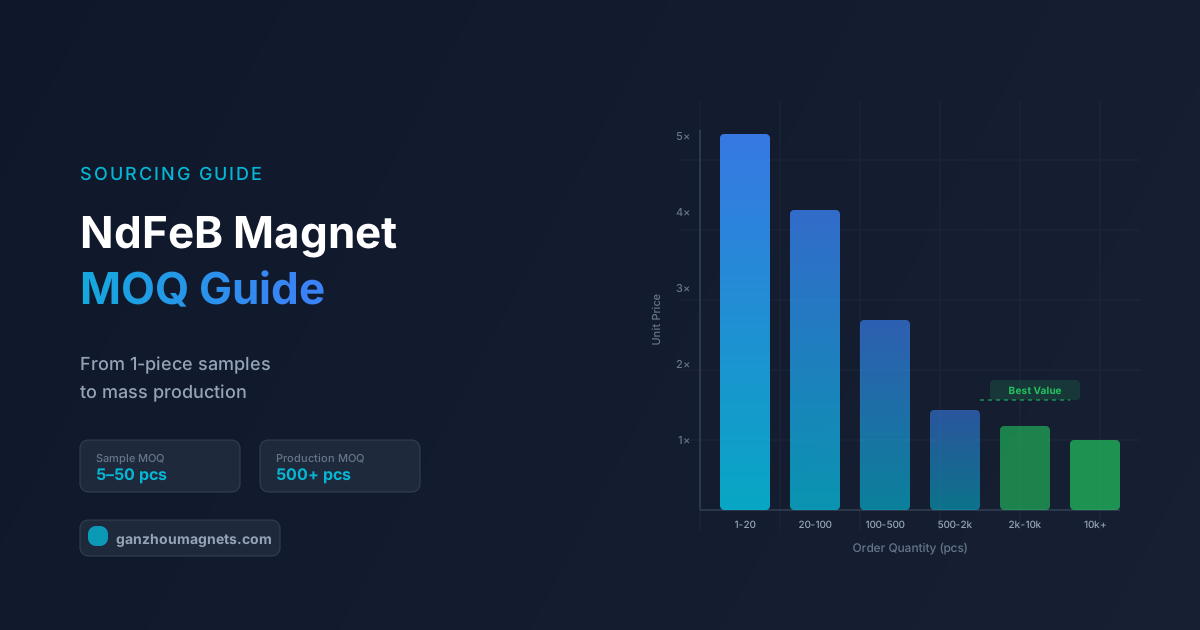
NdFeB magnet pricing follows a step-function pattern. Understanding the breakpoints helps you optimize order quantities:
| Quantity Range | Price Level | Notes |
|---|---|---|
| 1–20 pcs | Sample pricing (highest) | Expect 3–5× volume price |
| 20–100 pcs | Small batch premium | ~2× volume price |
| 100–500 pcs | Near-production pricing | 1.3–1.5× volume price |
| 500–2,000 pcs | Standard production | Base price |
| 2,000–10,000 pcs | Volume discount | 5–15% below base |
| 10,000+ pcs | Best pricing | 15–25% below base, negotiable |
Pro tip: If your annual consumption is 5,000+ pieces, consider a blanket order with scheduled releases. This locks in volume pricing while reducing inventory carrying costs.
Factors That Affect MOQ
1. Grade Selection
Common grades (N35, N42, N52) have lower MOQs because factories maintain stock alloy. Specialty grades (N48SH, N42UH) may require dedicated alloy melting with higher MOQs.
2. Coating Type
- NiCuNi, Zinc: No MOQ impact — standard processes
- Epoxy: May require minimum batch for coating tank efficiency (typically 200+ pcs)
- Parylene: Often outsourced, may have its own MOQ (100–500 pcs)
3. Tolerance Requirements
Tighter tolerances (±0.02 mm vs. ±0.05 mm) increase machining time and scrap rate. Some factories set higher MOQs for precision work to justify setup time.
4. Magnetization Direction
Standard axial or diametral magnetization has no MOQ impact. Multi-pole or custom magnetization patterns may require fixture fabrication, adding to the effective MOQ.
How to Reduce Your Effective MOQ
If your target quantity is below the supplier's stated MOQ, consider these strategies:
- Combine orders — Group multiple magnet specs into one purchase order
- Accept standard tolerances — ±0.05 mm instead of ±0.02 mm reduces setup complexity
- Use stock grades — N35, N38, N42, N45, N48, N52 are commonly stocked
- Work with a sourcing partner — Consolidators can combine your order with other buyers
- Start with samples — Most suppliers have no MOQ for sample orders (just higher unit price)
Frequently Asked Questions
Can I order just 1 piece?
Yes, for standard shapes and sizes. Expect to pay a significant premium (5–10× production price) and the supplier may charge a handling/setup fee of $30–$80.
Do I need to pay for tooling?
For standard shapes (disc, block, ring), tooling is rarely needed. Custom shapes with complex geometry may require a one-time tooling fee of $100–$500, which is typically waived if you place a production order.
How do I get the best price for small quantities?
Order samples first (10–20 pcs at sample pricing), validate your requirements, then commit to the largest quantity you can justify. The biggest price drops occur between 100 and 500 pieces.
What happens if I order below MOQ?
Most suppliers will still accept the order but with conditions:
- Higher unit price (1.5–3× standard)
- Longer lead time (they may batch your order with others)
- Limited grade/coating options
Need a quote for custom NdFeB magnets? Submit your RFQ with your target spec and quantity — we provide pricing for sample through production volumes.
Author

Categories
More Posts
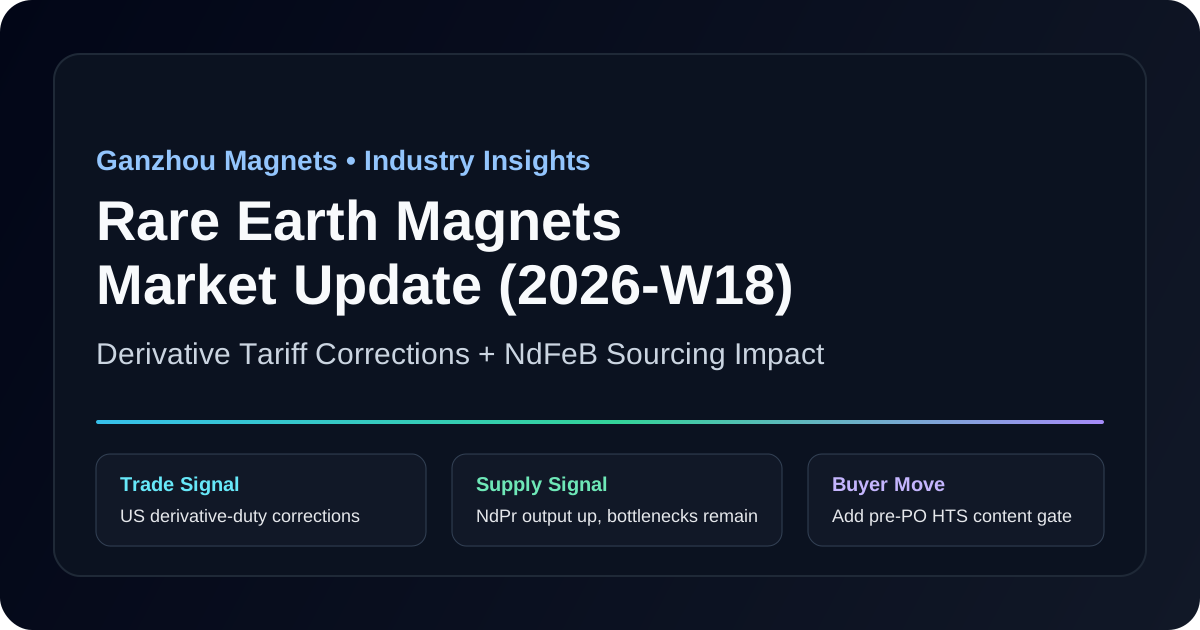
Rare Earth Permanent Magnets Market Update (2026-W18): Derivative Tariff Corrections Add a New Compliance Gate
Week 18 rare earth magnets update: U.S. derivative-duty corrections, NdFeB and Sm supply signals, and immediate sourcing actions for US, EU, and LATAM buyers.
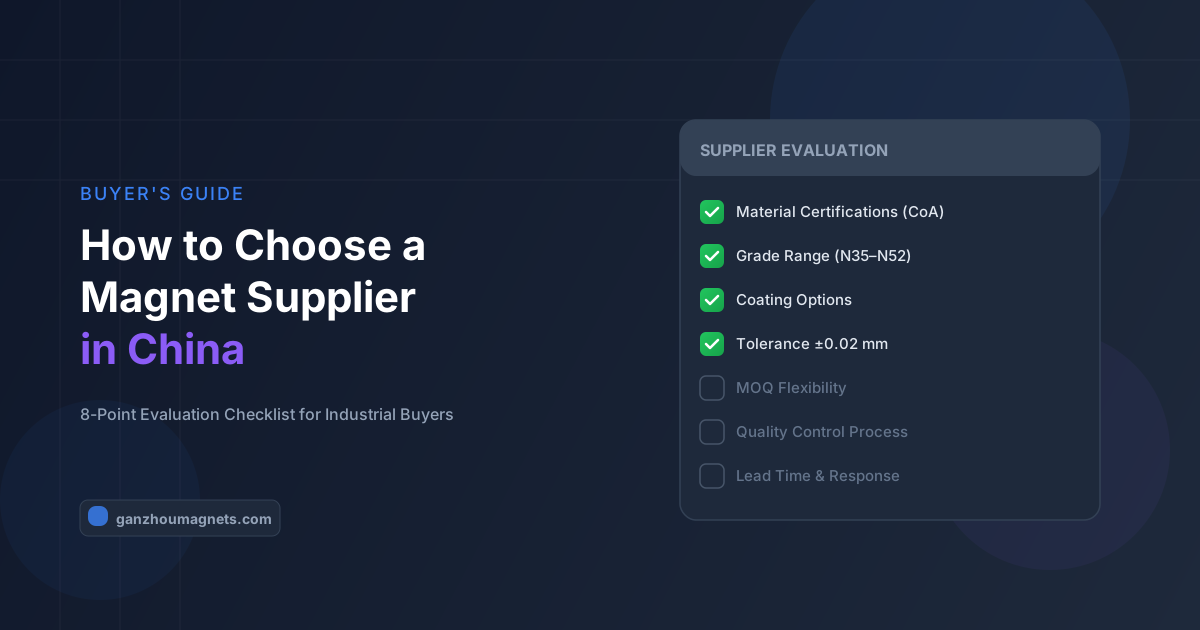
How to Choose a Custom Magnet Supplier in China: A Buyer's Checklist
A practical guide for industrial buyers evaluating Chinese magnet suppliers. Covers factory vs. trading company, quality certifications, MOQ expectations, and red flags to avoid.

Reducing Heavy Rare Earth Costs: The 2026 Buyer's Guide to Grain Boundary Diffusion (GBD) NdFeB Magnets
A comprehensive guide for engineers and procurement teams on using Grain Boundary Diffusion (GBD) to reduce Dysprosium (Dy) and Terbium (Tb) costs in high-temperature NdFeB magnets.