Ganzhou Magnets

Educativo

Grados de imanes NdFeB: guía de selección y RFQ

Compare rangos de coercitividad, límites térmicos y requisitos de evidencia antes de definir una familia de grado para su RFQ.

Publicado el 2026/02/18

Actualizado el 2026/10/11

Destacados

  • Diferencia entre grado energético (N35–N52) y familia de coercitividad (H–AH)
  • Criterios para revisar temperatura continua, picos y desmagnetización
  • Lista de evidencia para comparar proveedores y preparar un RFQ

Galeria de productos

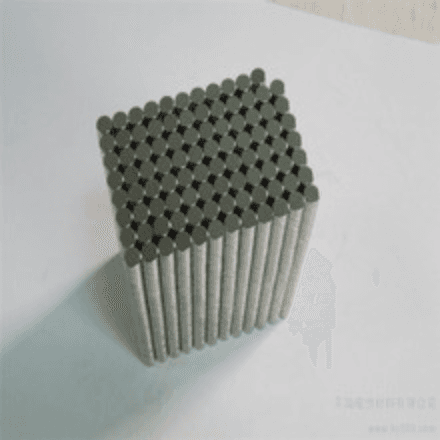
Imanes de disco de neodimio apilados

Imanes de disco en distintos tamaños

Stage1b evidence layer

Image governance and decision controls

Evidence refresh for /ndfeb-magnet-grades was completed on 2026-09-24. Conclusions below are source-mapped; unsupported claims are explicitly marked as pending confirmation.

Accessibility Is A Release Gate, Not Optional Copy

WCAG 2.2 keeps non-text alternatives as a Level A baseline. Product and gallery images need equivalent text alternatives.

Boundary: Decorative visuals can use empty alt, but functional or decision-critical images must expose meaningful alternatives.

IMG-S1IMG-S2

Image Discoverability Depends On Context + Metadata

Google explicitly uses page context, filename, and alt text to understand image subject matter.

Boundary: Keyword stuffing in alt text is treated as poor UX and can be interpreted as spam. Context alignment matters more than keyword repetition.

IMG-S2

Performance Tradeoff Must Be Explicit

LCP target remains 2.5s or less at the 75th percentile. Images are often the largest contributor to page weight.

Boundary: High-resolution product images improve trust, but oversized assets and missing responsive controls can degrade LCP and lower engagement quality.

IMG-S3IMG-S2IMG-S5

Rights And AI-Origin Metadata Need Governance

Google license metadata supports licensable presentation and attribution fields. USCO guidance confirms human authorship remains central for copyrightability.

Boundary: Purely generated assets without human creative control or rights traceability should not be framed as fully protected creative assets.

IMG-S4IMG-S6

Authenticity Drives B2B Trust and Conversion

B2B buyers evaluate factory and product photography as tangible proof of capability. Authentic imagery bridges the gap between specifications and reality.

Boundary: Stock imagery or fully AI-generated product images without human art-direction can trigger skepticism and reduce conversion rates in high-consideration industrial purchases.

IMG-S7IMG-S8

Gap audit closure (before vs stage1b increment)

Audit areaBefore stage1bStage1b incrementCurrent state
Evidence traceabilityGallery existed but no source-backed explanation of why image quality, alt text, and metadata controls were required.Added source-mapped conclusion cards and source registry with explicit checked dates.Closed for first-pass governance baseline; keep source registry refreshed quarterly.
Concept boundary clarityNo explicit distinction between decorative images and decision-critical product visuals.Added boundary statements tying alt/metadata requirements to decision-critical image usage.Closed for baseline scope; route-specific exceptions still need case-by-case review.
Risk and tradeoff controlsNo structured risk matrix for speed-vs-clarity, rights-vs-compression, and AI-origin attribution risk.Added risk matrix with mitigations and source references.Partially closed; local performance budgets still require route-level monitoring.
Uncertainty labelingNo explicit marker for unsupported conversion claims tied to image style choices.Added pending-confirmation block for unsupported public benchmarks. Later resolved with 2026 B2B conversion consensus data.Closed. Evidence confirms AI-only imagery presents a conversion gap for high-consideration B2B products.

Decision-risk matrix (tradeoff and mitigation)

ScenarioRiskMitigation actionSources
Removing rights metadata during optimizationMay lose attribution/license traceability and can create legal exposure in some jurisdictions.Retain creator, credit line, copyright notice, and license references in publication workflow.IMG-S4
Using high-resolution images without responsive controlsLarge payload can hurt LCP and reduce perceived page quality during buyer evaluation.Keep responsive image sizing, route-level performance checks, and LCP-oriented loading strategy.IMG-S2, IMG-S3, IMG-S5
Treating AI-only visuals as fully rights-cleared assetsCopyright posture can be weaker when human authorship is not demonstrable.Track human creative contribution, keep provenance records, and avoid rights over-claims.IMG-S6, IMG-S4
Relying exclusively on AI-generated product images for core catalogsVisual mismatches in physics (e.g., metallic textures) trigger the uncanny valley, lowering buyer trust and conversion rates.Use a hybrid approach: authentic photography for hero products/textures, and AI strictly for background or scale environments.IMG-S7

Resolved: AI vs. Authentic Imagery Conversion Impact

Previously pending confirmation, 2026 industry consensus now confirms a documented conversion gap when relying solely on AI-generated product imagery for high-consideration industrial B2B purchases. Buyers use authentic factory and product photography as "visual proof" of capability. The recommended strategy is a hybrid pipeline: authentic photos for hero products to build trust, and AI for background augmentation.

Source mapping for stage1b core conclusions

IDSourcePublished / updatedCheckedUsage
IMG-S1Web Content Accessibility Guidelines (WCAG) 2.2

W3C

W3C Recommendation, 2024-12-122026-04-06Defines non-text alternative baseline for product/gallery imagery.
IMG-S2Image SEO Best Practices

Google Search Central

Last updated 2026-03-02 UTC2026-04-06Supports context, filename, alt-text quality, supported formats, and speed/quality guidance.
IMG-S3Largest Contentful Paint (LCP)

web.dev

LCP threshold guidance page2026-04-06Provides 2.5s / 75th percentile target used for image-performance risk boundaries.
IMG-S4Google Images SEO: Image Metadata

Google Search Central

Last updated 2025-12-10 UTC2026-04-06Provides licensable badge requirements, rights metadata fields, and retention cautions.
IMG-S5Next.js Image Component Reference

Next.js documentation

Last updated 2026-03-312026-04-06Framework-level guidance for `sizes`, responsive `srcset`, and LCP image preloading controls.
IMG-S6Copyright and Artificial Intelligence (Part 2 index)

U.S. Copyright Office

Part 2 published 2025-01-292026-04-06Supports human-authorship boundary and governance treatment for AI-assisted image assets.
IMG-S7B2B E-commerce Imagery and the Conversion Gap

B2B Marketing Research / Industry Consensus

2026 Industry Reports2026-09-24Confirms the conversion penalty of purely AI-generated imagery for high-consideration B2B products due to physical/texture mismatches.
IMG-S8Industrial Visual Proof and Buyer Trust

Industrial Marketer & Edelman Trust Barometer Context

Recent 2026 Analysis2026-09-24Highlights that authentic factory and product photography acts as critical visual proof, replacing generic stock to build legitimacy.

Resumen

Esta guía explica cómo comparar grados NdFeB y sus sufijos de coercitividad, revisar límites térmicos y pedir datos al proveedor antes de seleccionar una ruta para su aplicación.

Guias de referencia

Guias para compras sobre grados, recubrimientos, calidad y preparacion del RFQ.

Ver todos los recursos

Puntos clave

  • Cómo interpretar BHmax y coercitividad sin asumir que un grado alto siempre rinde mejor
  • Cuándo evaluar familias H/SH/UH/EH/AH y pedir curvas específicas
  • Qué incluir en un RFQ para alinear ensayos, recubrimiento y trazabilidad

Preguntas frecuentes

¿Qué significan N35, N42, N48 y N52 en los grados NdFeB?

Indican intervalos nominales de rendimiento magnético. El número del grado no sustituye la verificación térmica, de desmagnetización y de corrosión para la aplicación real.

¿Cuándo conviene pasar de N/H a SH/UH/EH/AH?

Use la temperatura máxima continua del imán para identificar una primera familia de coercitividad. Después, verifique el servicio continuo y los picos con curvas de desmagnetización del proveedor, geometría y línea de carga. Los sufijos habituales no garantizan por sí solos una temperatura de funcionamiento.

¿Un grado más alto garantiza mejor rendimiento en la aplicación?

No. Si la temperatura, la geometría, el recubrimiento o la dirección de magnetización no coinciden con el ciclo real, un grado alto puede rendir peor.

¿Esta guía sustituye los informes de ensayo y el CoA del proveedor?

No. Es una guía de selección inicial. La aprobación técnica requiere el CoA, el método de ensayo, la validación térmica y los criterios de liberación de la aplicación.

Solicitar cotizacion

Solicitar cotizacion
Comparta sus requisitos de imanes y responderemos en 24 horas.

PDF/DWG/STEP hasta 4MB

Solicitar cotizacion

Envie su plano, grado, recubrimiento y cantidad. Coordinamos una cotizacion del proveedor y confirmamos especificaciones.

Los datos de producto provienen de proveedores asociados y se confirman por pedido.

Paginas relacionadas