
Shipping Neodymium Magnets: Air vs. Sea Freight and IATA Shielding Guidelines
B2B guide to shipping neodymium magnets by air or sea: IATA UN2807 limits, shielding methods, freight choices, checklist, and quote support.
The Hidden Complexity of Shipping Rare Earth Magnets
When shipping neodymium magnets from China, production is only half the battle. Delivering high-strength NdFeB permanent magnets safely to your facility presents a unique logistical challenge: strong magnetic fields can interfere with aircraft navigation and communication systems.
Because of this risk, international aviation authorities strictly regulate how permanent magnets are packaged, labeled, and shipped. A single oversight in your supplier's packaging can lead to rejected shipments at the airport, costly repacking fees, or severe delays.
For procurement teams and buyers, understanding the rules around magnetic shielding, IATA regulations, and freight modes is critical to maintaining a predictable supply chain and avoiding budget overruns.
Scope note (last reviewed July 23, 2026): This guide is written for global B2B buyers shipping magnetized NdFeB parts from Chinese factories. It explains procurement decisions and supplier questions; it is not a substitute for the current IATA Dangerous Goods Regulations, national dangerous-goods rules, carrier approval, or advice from a licensed freight forwarder.
The Rules of Air Transport: IATA UN2807 and PI 953
Air transport of magnetic materials is governed by the International Air Transport Association (IATA) under Dangerous Goods Regulations (DGR) Packing Instruction 953 (formerly PI 902).
Under these rules, magnets are classified based on the strength of the magnetic field they emit after being packaged in their final shipping carton. There are three categories of classification:
1. Non-Restricted Cargo (Passes the 2.1m Test)
If the maximum magnetic field strength measured at a distance of 2.1 meters (7 feet) from the surface of the assembled package is less than 0.002 Gauss (0.159 A/m), the package is not considered restricted. It can be shipped as standard cargo on commercial or passenger aircraft without special dangerous goods declarations.
2. Class 9 Dangerous Goods: UN2807 (Fails 2.1m, Passes 4.6m)
If the magnetic field exceeds 0.002 Gauss at 2.1 meters, but is less than 0.00525 Gauss (0.418 A/m) at a distance of 4.6 meters (15 feet), the shipment is classified as UN2807: Magnetized Material.
- It falls under Class 9 Miscellaneous Dangerous Goods.
- It requires a Dangerous Goods Declaration (DGD).
- It must carry the specific "Magnetized Material" Class 9 handling label.
- It can still be flown, but usually incurs dangerous goods surcharges and requires specially certified logistics carriers.
3. Forbidden for Air Transport (Fails the 4.6m Test)
If the package emits a magnetic field of 0.00525 Gauss or more at 4.6 meters, it is strictly forbidden from air transport. The shipment must either be repackaged with heavier magnetic shielding or shipped via sea freight.
How Factories Shield Magnets for Air Transport
To ensure NdFeB magnets pass the IATA magnetometer test at the airport, professional magnet suppliers use specialized packaging techniques.
The Alternating Polarity Method
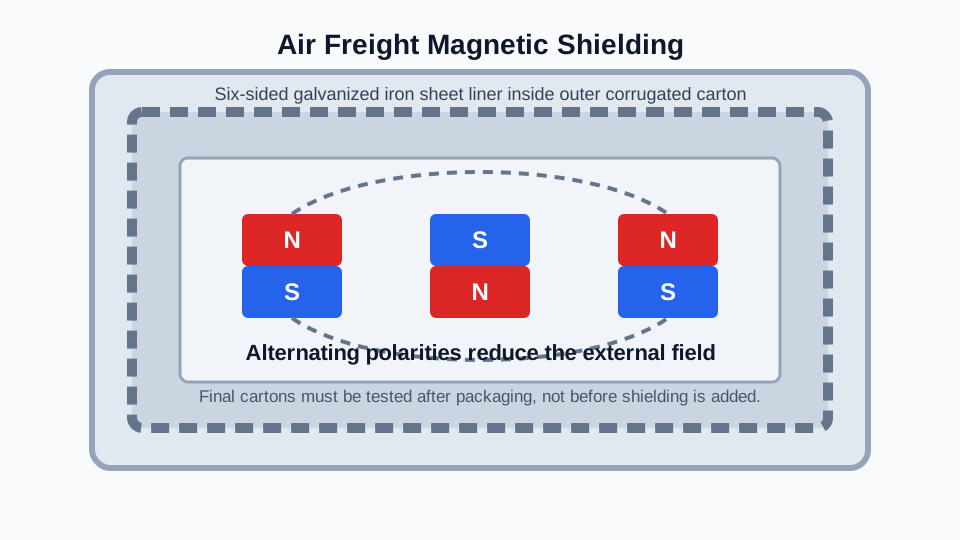
The first line of defense is how the magnets are arranged within the inner boxes. By alternating the polarities of the magnets (N-S next to S-N), the magnetic fields cancel each other out over a short distance. If all magnets face the same direction, their magnetic fields compound, making it impossible to pass air freight inspections.
Iron Sheet Shielding
For strong grades (N42 to N52) or larger volumes, alternating polarity is not enough. The supplier must line the inside of the cardboard carton with galvanized iron sheets. Iron is highly permeable, meaning it absorbs and redirects the magnetic flux lines, preventing them from escaping the box.
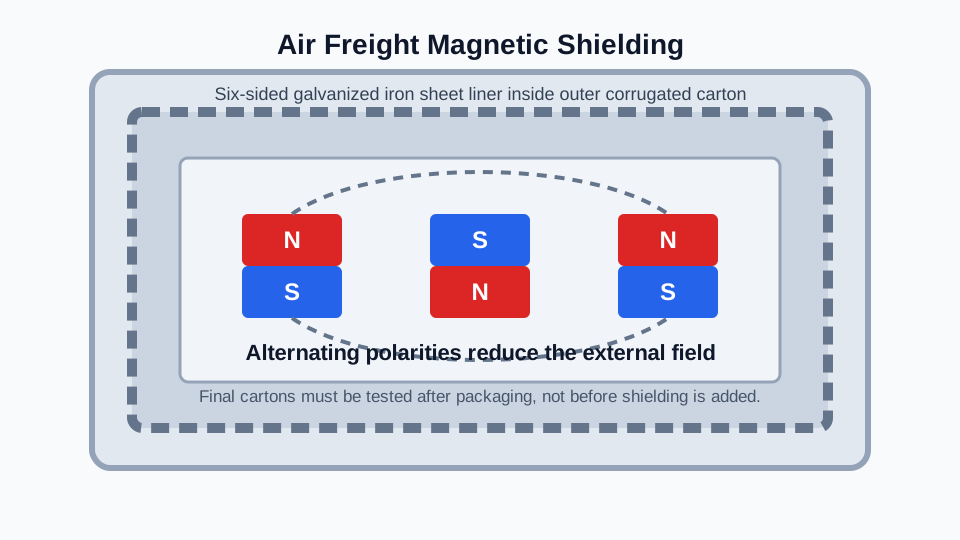
Above: A cross-section of compliant air freight packaging. Magnets are placed in alternating polarities and surrounded by iron sheets on all six sides.
The Shielding Penalty
While iron sheets allow magnets to fly safely, they introduce a massive weight penalty. The iron shielding can add 20% to 50% extra weight to your shipment. Because air freight is billed by weight (or volumetric weight), this significantly increases your landing costs.
Air Freight vs. Sea Freight: A Cost and Strategy Comparison
When deciding how to move your magnets from a Chinese factory to your assembly line, you must balance lead time, shipping costs, and the iron shielding weight penalty.
Below is a direct comparison of the major transit modes used for B2B neodymium magnet logistics:
| Logistics Mode | Transit Time | Cost Level | Shielding Required? | Best Used For | Key Constraints |
|---|---|---|---|---|---|
| Air Express (DHL/FedEx) | 3–7 Days | Very High | Yes (Heavy Iron) | Urgent samples, low volume production runs. | Class 9 surcharges apply. Weight penalty from shielding makes it uneconomical for >100kg. |
| Standard Air Freight | 7–12 Days | High | Yes (Heavy Iron) | Mid-volume orders needed quickly to prevent assembly line downtime. | Must pass DGR magnetometer test. May face delays during strict airport inspections. |
| Sea Freight (LCL) | 25–40 Days | Low | No (Standard Carton) | Regular volume production (100kg - 1,000kg). | Long lead time requires careful supply chain planning. Minimal magnetic limits. |
| Sea Freight (FCL) | 25–40 Days | Very Low | No (Standard Carton) | Massive, long-term OEM contracts (>1,000kg). | Requires filling a 20ft container. Lowest cost per piece. |
| Rail (China to EU) | 18–25 Days | Medium | No (Standard Carton) | European buyers wanting a middle ground. | Only available for Eurasian landmass. No magnetic shielding required. |
| Sea/Air Combination | 15–20 Days | Medium-High | Yes (Heavy Iron) | Delayed sea freight that needs a boost via transshipment hubs. | Still requires air-compliant shielding for the final leg. |
The Procurement Takeaway: If your supply chain can tolerate a 30-day lead time, sea freight is always the most economical choice. Not only is the base rate lower, but you avoid paying to fly dead weight (iron sheets) across the world.
If a shipment is already tied to an RFQ deadline, send the estimated part size, grade, coating, order weight, and destination to Ganzhou Magnets before cartons are packed so the freight mode and shielding plan can be checked early.
Procurement Checklist: Evaluating Your Magnet Shipment
Before placing an order for custom NdFeB magnets, use this checklist with your purchasing team and supplier to avoid logistics traps:
- Have you finalized the total estimated gross weight? Ensure the supplier quote specifies both net weight (the magnets) and gross weight (including iron shielding if flying).
- Are you using a certified logistics forwarder? Not all freight forwarders are licensed to handle Class 9 Dangerous Goods. Ensure your agent is IATA DGR certified.
- Who handles the magnetic inspection fee? Chinese airports mandate a magnetic inspection report before boarding. Clarify if this fee ($30–$80 per shipment) is included in the supplier's FOB/EXW price.
- Have you considered DDP Incoterms? For buyers without extensive import experience, requesting Delivered Duty Paid (DDP) pushes the risk of customs, magnetic inspection, and transport onto the supplier.
- Can the shipment be split? If you need magnets urgently, consider flying 10% of the volume via Air Express (with shielding) and sending the remaining 90% via Sea Freight (without shielding).
- Are you ordering extremely large magnets? Large magnet blocks (e.g., 100x50x25mm N52) emit massive fields. Sometimes, no amount of practical iron shielding will reduce the field below 0.00525 Gauss. These must ship by sea.
Procurement Scenario: When Air Freight Shielding Goes Wrong
To illustrate the importance of proper magnetic packaging, consider a typical scenario faced by inexperienced B2B importers. A European motor manufacturer urgently ordered 500 kg of N42SH arc magnets for a new EV prototype build. To save time, they instructed a new, unverified trading company to ship the magnets via Air Express.
The Mistake: The trading company packed the magnets in standard corrugated cartons without alternating polarities properly and without adding the necessary galvanized iron sheets. They assumed the courier would handle the compliance.
The Result:
- Airport Rejection: The shipment reached the Shanghai Pudong International Airport (PVG) cargo terminal. During the mandatory magnetometer scan, the package emitted a field of 0.012 Gauss at 4.6 meters—more than double the IATA limit for UN2807.
- Confiscation and Fines: The airline rejected the cargo immediately. The freight forwarder was fined for attempting to board undeclared Class 9 goods.
- Repacking Delays: The supplier had to dispatch a truck to retrieve the goods from the airport warehouse, bring them back to the factory, purchase iron sheets, and repack the entire 500 kg order.
- Added Costs: The iron sheets added 150 kg of dead weight to the shipment. The buyer was forced to pay the air freight rate for 650 kg instead of 500 kg, plus the repacking fees and the initial fine.
- Downtime: The prototype build was delayed by 14 days, negating the entire purpose of paying premium air freight rates in the first place.
The Lesson: Always verify that your supplier has in-house experience with IATA PI 953 packing. If they rely on a third-party trading company or a cheap local forwarder to handle the shielding, you are at risk of severe delays and hidden costs. Ask for photos of the iron shielding before the cartons are sealed.
Frequently Asked Questions (FAQ)
Can I ship magnetized material via UPS or FedEx?
Yes, but major couriers treat strong magnets as Dangerous Goods. You must declare them properly, use the Class 9 Magnetized Material label, and ensure the package passes the 2.1m or 4.6m Gauss test. Failure to declare magnets can result in heavy fines or account suspension.
Why was my air shipment delayed at the Chinese airport?
Airport security strictly screens for magnetic fields. If a package triggers the magnetometer threshold, the airline will reject the cargo. The supplier must then retrieve the package, add more iron sheets, re-test, and book a new flight.
Do SmCo (Samarium Cobalt) or Ferrite magnets require the same shielding?
Yes. IATA regulations govern the magnetic field strength regardless of the material. SmCo magnets are very strong and will require similar iron shielding for air transport. Ferrite magnets are weaker, but large shipments of ferrite may still trigger limits and require testing.
Does the iron shielding damage the magnets?
No. The iron sheets simply redirect the magnetic flux. However, the supplier must ensure the inner boxes are tightly packed. If loose, the magnets might attract strongly to the iron walls, making them difficult to unpack or causing them to chip against each other.
Sources & References
To ensure compliance with current regulations, always consult official transportation guidelines or your licensed freight forwarder:
- IATA: Dangerous Goods Regulations (DGR)
- Dura Magnetics: Shipping Magnets by Air - DOT/IATA Regulations
- The Compliance Center: How to Ship Magnets by Air (UN2807)
Struggling with the complexities and high costs of importing rare earth magnets? At Ganzhou Magnets, our logistics team manages strict IATA magnetic shielding and offers seamless DDP delivery directly to your facility. Request a quote today to optimize your magnet supply chain.
Author

Categories
More Posts
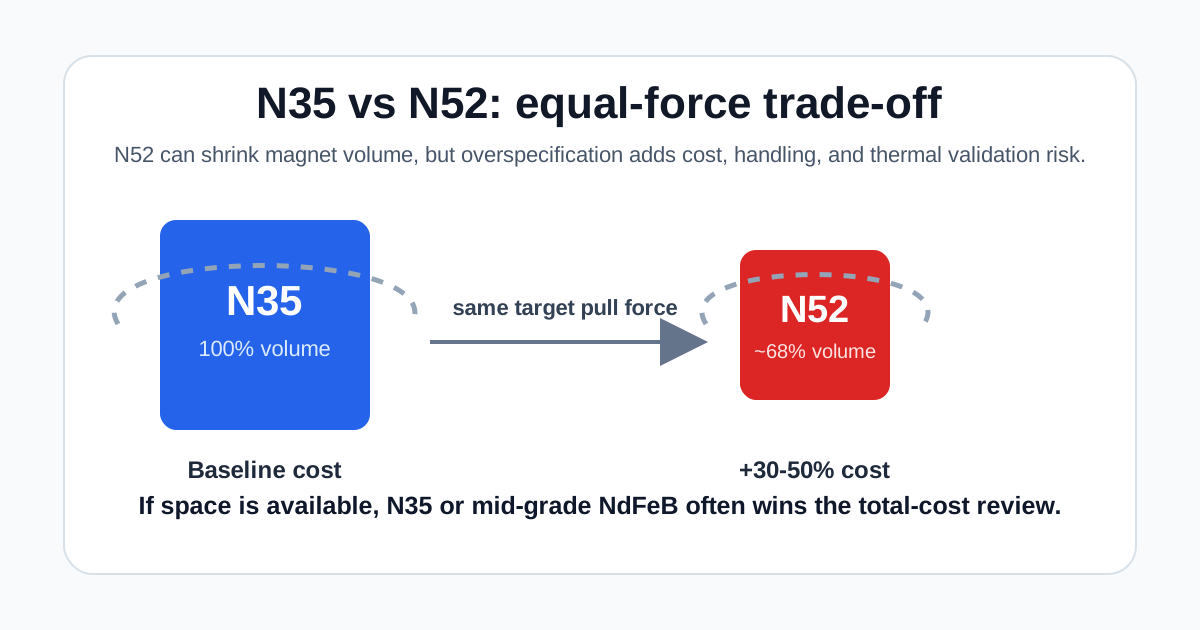
N35 vs N52 Neodymium Magnets: The Hidden Costs of Over-Specification
A comprehensive guide for engineers and procurement teams comparing N35 and N52 neodymium magnets. Learn how to avoid the hidden costs of over-specification.
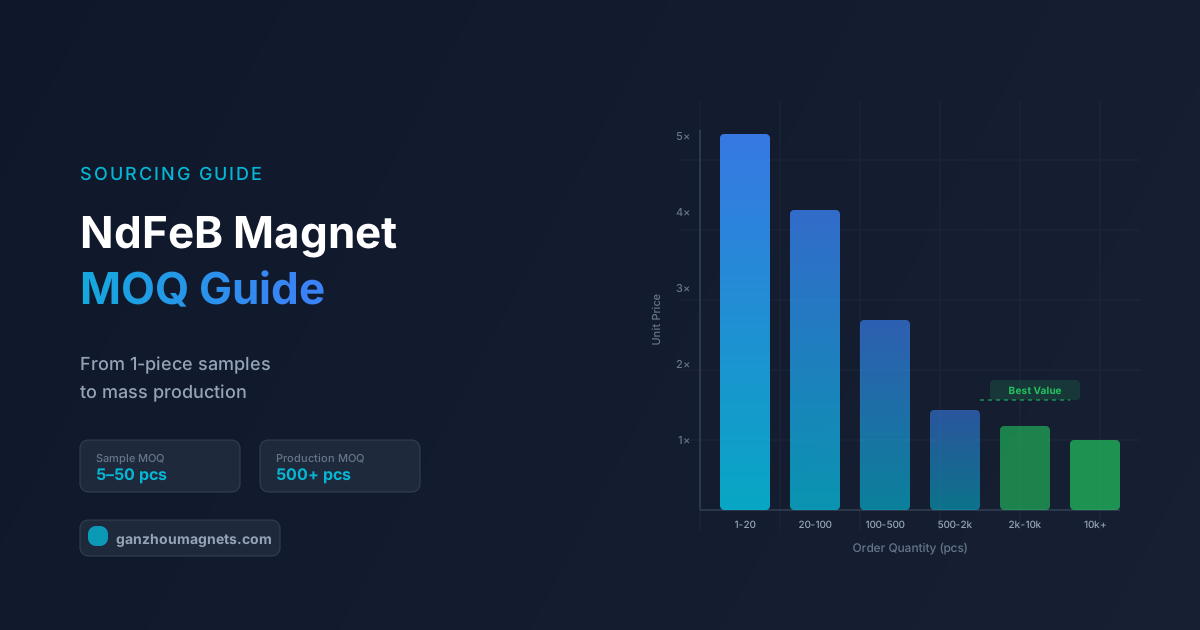
Guía de MOQ para imanes NdFeB: De muestras de 1 pieza a producción en masa
Comprenda las cantidades mínimas de pedido para imanes de neodimio personalizados de proveedores chinos. Incluye pedidos de muestra, prototipos y puntos de precio por volumen.
Rare Earth Permanent Magnets Market Update (2026-W15): Procurement Signals Buyers Should Act On Now
A buyer-focused March-April 2026 update on NdFeB grades, Sm-containing supply, trade-policy signals, and practical sourcing actions for US, EU, Latin America, and global industrial teams.