
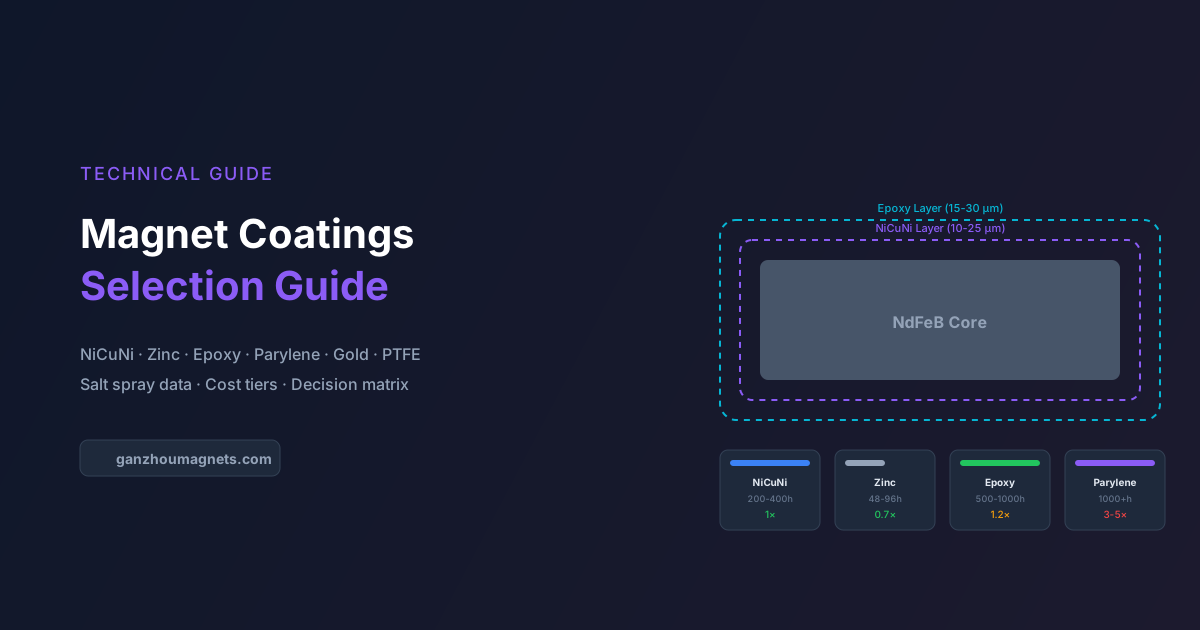
Magnet Coatings and Surface Treatments: Complete Selection Guide
In-depth comparison of NdFeB magnet coatings — NiCuNi, zinc, epoxy, parylene, gold, and PTFE. Includes salt spray data, cost tiers, thickness impact, and application-specific recommendations.
Why Coatings Matter
Sintered NdFeB magnets contain iron (approximately 64% by weight), making them inherently vulnerable to oxidation. Without surface protection, a bare NdFeB magnet will develop surface rust within days in humid conditions and lose magnetic performance within months.
The right coating choice directly impacts:
- Product lifetime — from months to decades
- Dimensional budget — coatings add 5–50 μm per side
- Cost — from $0.01 to $2+ per piece
- Compliance — some coatings enable medical or food-contact applications
Coating Comparison Table
| Coating | Salt spray (hrs) | Thickness (μm) | Max temp (°C) | Relative cost | Best for |
|---|---|---|---|---|---|
| NiCuNi | 200–400 | 10–25 | 200 | 1× (baseline) | General industrial |
| Zinc | 48–96 | 8–15 | 120 | 0.7× | Indoor, cost-sensitive |
| Epoxy | 500–1,000 | 15–30 | 150 | 1.2× | Harsh environments |
| NiCuNi + Epoxy | 1,000+ | 25–50 | 150 | 1.8× | Marine, outdoor |
| Parylene C | 1,000+ | 5–15 | 125 | 3–5× | Medical, aerospace |
| Gold (Au) | 500+ | 2–5 | 200 | 5–10× | Soldering, electronics |
| PTFE | 200–400 | 15–40 | 260 | 2–3× | Chemical resistance |
| Passivation | 24–48 | 0–1 | — | 0.3× | Temporary protection |
Detailed Coating Profiles
NiCuNi (Nickel-Copper-Nickel)
The industry standard coating for NdFeB magnets. The three-layer structure provides:
- Nickel base layer: Adhesion to the magnet substrate
- Copper interlayer: Ductile barrier against micro-cracks
- Nickel top layer: Hard, bright surface finish
Advantages:
- Proven reliability with decades of field data
- Smooth, bright surface finish
- Good solderability with flux
- Temperature resistance up to 200°C
Limitations:
- Contains nickel (restricted in EU skin-contact applications under REACH)
- Can chip under impact, exposing substrate
- Not suitable for extended saltwater immersion
Typical thickness: 10–15 μm (standard), 15–25 μm (heavy duty)
Zinc
The most cost-effective coating option for indoor applications.
Advantages:
- 30% lower cost than NiCuNi
- Sacrificial protection (zinc corrodes before the magnet)
- No nickel allergen concern
- Simple plating process
Limitations:
- Lower salt spray resistance (48–96 hours)
- Dull grey appearance (can be chromate-passivated for blue/yellow finishes)
- Limited temperature resistance (120°C)
Best for: HVAC actuators, indoor sensors, cost-sensitive consumer products
Epoxy
A polymer coating applied by electrophoretic deposition (e-coating) or spray.
Advantages:
- Excellent chemical resistance
- High salt spray hours (500–1,000)
- Available in colors (black is most common)
- No metallic allergens
- Electrically insulating
Limitations:
- Softer than metallic coatings (can scratch)
- Thicker than NiCuNi (impacts dimensional budget)
- Temperature limited to 150°C
- UV degradation in prolonged outdoor exposure
Best for: Sensors in harsh environments, water treatment equipment, outdoor applications
Parylene C
A vapor-deposited conformal polymer coating. Applied at room temperature and molecular level, it provides the most uniform coverage of any coating type.
Advantages:
- Perfectly uniform thickness (no edge buildup or pooling)
- Biocompatible (USP Class VI, ISO 10993)
- Excellent chemical and moisture barrier
- Pinhole-free at just 5 μm thickness
- Transparent
Limitations:
- High cost (3–5× of NiCuNi)
- Specialized equipment required (vacuum chamber)
- Temperature limited to 125°C continuous
- Poor adhesion without primer on some substrates
Best for: Medical implants, precision sensors, semiconductor equipment
Gold (Au)
Thin gold plating over nickel or copper base layers.
Advantages:
- Excellent solderability without flux
- Chemically inert
- High conductivity
- Aesthetically premium
Limitations:
- Very expensive (gold material cost)
- Thin layer (typically 2–5 μm)
- Must be applied over NiCu base
- Soft, easily scratched
Best for: SMD magnet components, RF applications, connectors with integrated magnets
PTFE (Teflon)
A fluoropolymer coating with exceptional chemical resistance.
Advantages:
- Resistant to virtually all chemicals and solvents
- Low friction (useful in sliding applications)
- FDA food-contact compliant
- High temperature resistance (up to 260°C)
Limitations:
- Thick coating (15–40 μm)
- Poor adhesion without etching/primer
- Higher cost than standard coatings
- Limited availability from magnet suppliers
Best for: Food processing equipment, chemical industry, high-temperature chemical environments
Coating Selection Decision Guide
Answer these three questions to choose your coating:
1. What is the operating environment?
| Environment | Recommended coating |
|---|---|
| Indoor, dry | Zinc or NiCuNi |
| Indoor, humid | NiCuNi or Epoxy |
| Outdoor | Epoxy or NiCuNi + Epoxy |
| Marine/saltwater | NiCuNi + Epoxy or PTFE |
| Chemical exposure | PTFE or Epoxy |
| Medical/implant | Parylene C |
2. What is the temperature range?
| Max temperature | Best options |
|---|---|
| Below 120°C | Any coating works |
| 120–150°C | NiCuNi, Epoxy, PTFE |
| 150–200°C | NiCuNi, Gold |
| Above 200°C | PTFE (up to 260°C), consider SmCo (no coating needed) |
3. What is the dimensional budget?
If your tolerance budget is tight (±0.02 mm), coating thickness matters:
| Coating | Added per side | Impact on ±0.02mm budget |
|---|---|---|
| Parylene C | 5–10 μm | Minimal |
| Gold | 2–5 μm | Negligible |
| Zinc | 8–15 μm | Moderate |
| NiCuNi | 10–25 μm | Significant — specify post-coating dimensions |
| Epoxy | 15–30 μm | Significant — grind to spec before coating |
Coating Specifications for Your RFQ
When specifying coatings in your RFQ, include:
- Coating type (e.g., NiCuNi)
- Thickness range (e.g., 10–15 μm per side)
- Salt spray requirement (e.g., minimum 200 hours per ASTM B117)
- Whether dimensions are pre- or post-coating
- Color (for epoxy: black, grey, blue, etc.)
- Compliance requirements (RoHS, REACH, biocompatibility)
Need help selecting the right coating for your magnets? Submit your RFQ with your operating environment details and we'll recommend the optimal surface treatment.
Author

Categories
More Posts
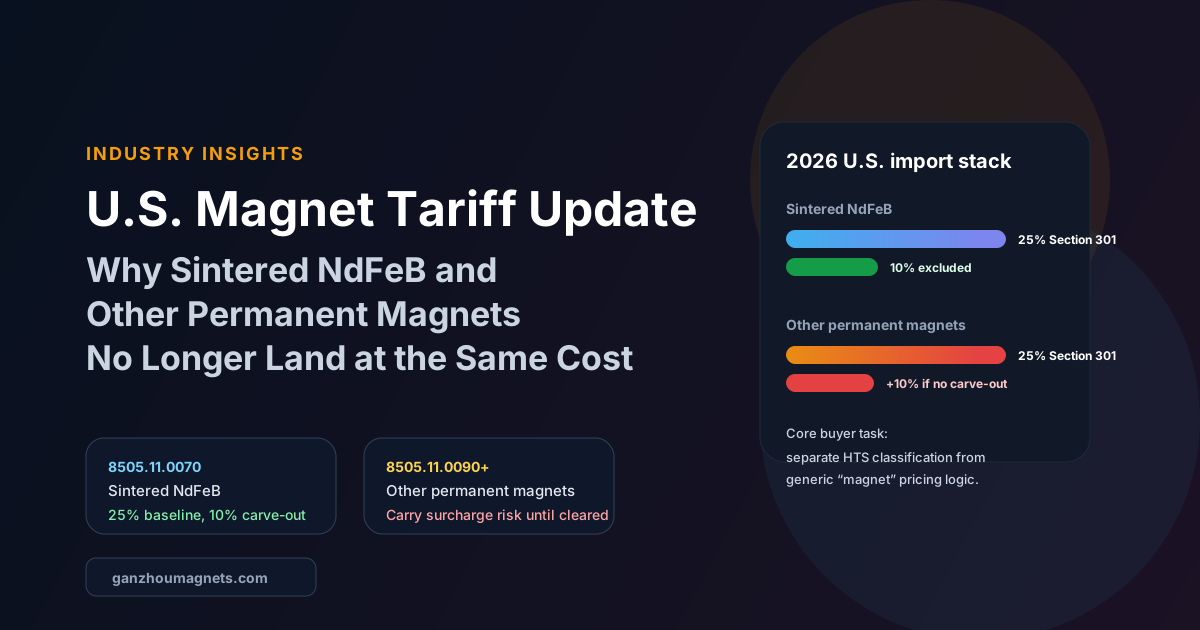
April 2026 U.S. Magnet Tariff Update: Sintered NdFeB Has a Different Surcharge Path
What U.S. importers should do now that the 2026 temporary import surcharge excludes HTS 8505.11.0070 sintered NdFeB magnets, while the broader 2026 Section 301 tariff on permanent magnets remains in force.

Why Ganzhou is the World Capital of Rare Earth Magnets
Ganzhou, China produces more rare earth magnets than any other city. Learn why its unique geology, integrated supply chain, and specialized workforce make it the global hub for NdFeB and SmCo manufacturing.
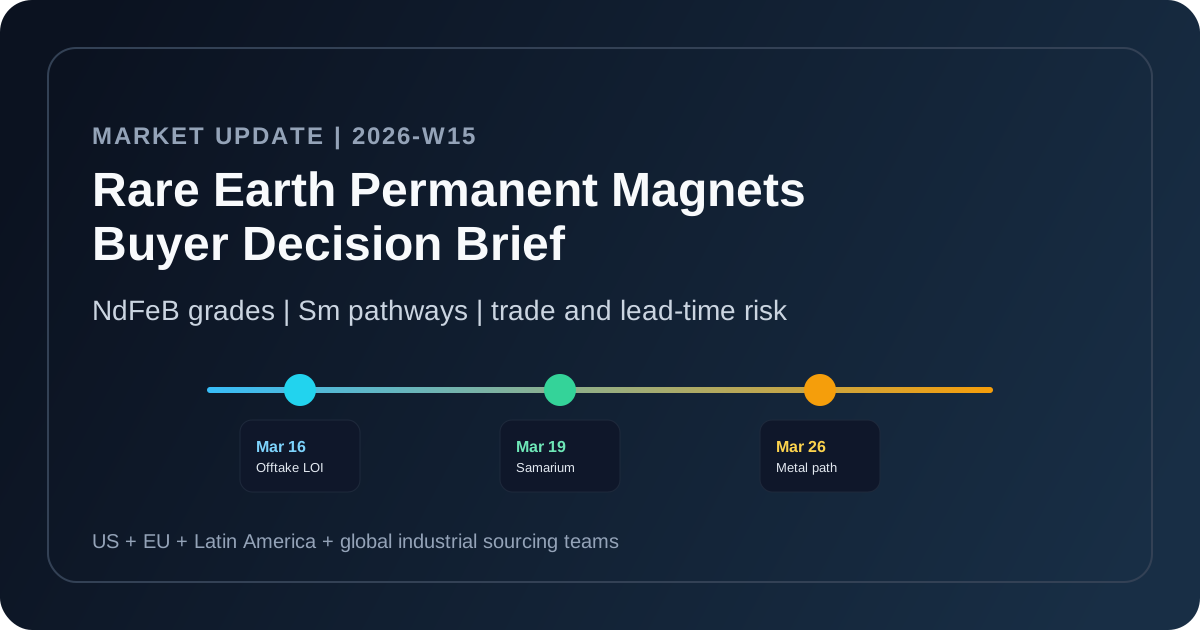
Rare Earth Permanent Magnets Market Update (2026-W15): Procurement Signals Buyers Should Act On Now
A buyer-focused March-April 2026 update on NdFeB grades, Sm-containing supply, trade-policy signals, and practical sourcing actions for US, EU, Latin America, and global industrial teams.